

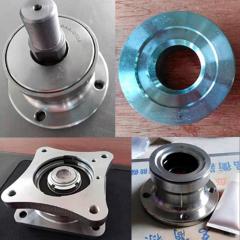

Agricultural bearings may look similar at first glance, but the supplier behind them can make a significant difference to equipment reliability, maintenance costs, and long-term profitability.
For distributors, OEM manufacturers, farm equipment dealers, and aftermarket buyers, selecting the wrong bearing supplier often results in premature failures, inconsistent quality, delayed deliveries, and costly downtime during critical planting or harvesting seasons.
Before placing your next order, ask these 10 key questions to evaluate an agricultural bearing supplier effectively.
1. Does the Supplier Specialize in Agricultural Bearings?

Not all bearing manufacturers understand agricultural applications. Agricultural machinery operates under conditions very different from industrial equipment. Bearings in disc harrows, seeders, balers, tillage equipment, and harvesters face:
- Heavy shock loads
- Dust and soil contamination
- Mud and moisture
- Fertilizer and chemical exposure
- Continuous vibration
A supplier focused on agricultural bearings understands these environments and provides products specifically designed for farm machinery. Typical offerings include square bore, round bore, hex bore, and flanged disc bearing units.
Tip: Ask for references or case studies in similar machinery to verify expertise.
2. What Sealing Technology Is Used?

Seal performance is often the primary factor determining bearing life. Many failures are caused not by the bearing itself but by contamination entering the bearing cavity. Dust, moisture, or fertilizer can degrade lubrication and dramatically reduce lifespan.
Check if the supplier offers:
- Triple-lip seals
- Additional rubber O-rings
- Field-tested sealing designs for disc harrows
Learn more about suitable sealing options in When Should You Choose Relubricable Disc Harrow Bearings?
3. Can the Bearings Replace OEM Part Numbers Directly?

Compatibility is essential. A reliable supplier should provide direct interchangeability with common agricultural bearing references and OEM part numbers, reducing inventory complexity.
Examples include ST491B Disk Harrow Unit and similar replacement units.
Ask:
- Which OEM numbers are supported?
- Are dimensional drawings provided?
- Can installation match the original component?
- Are samples available for verification?
4. How Does the Supplier Control Product Quality?
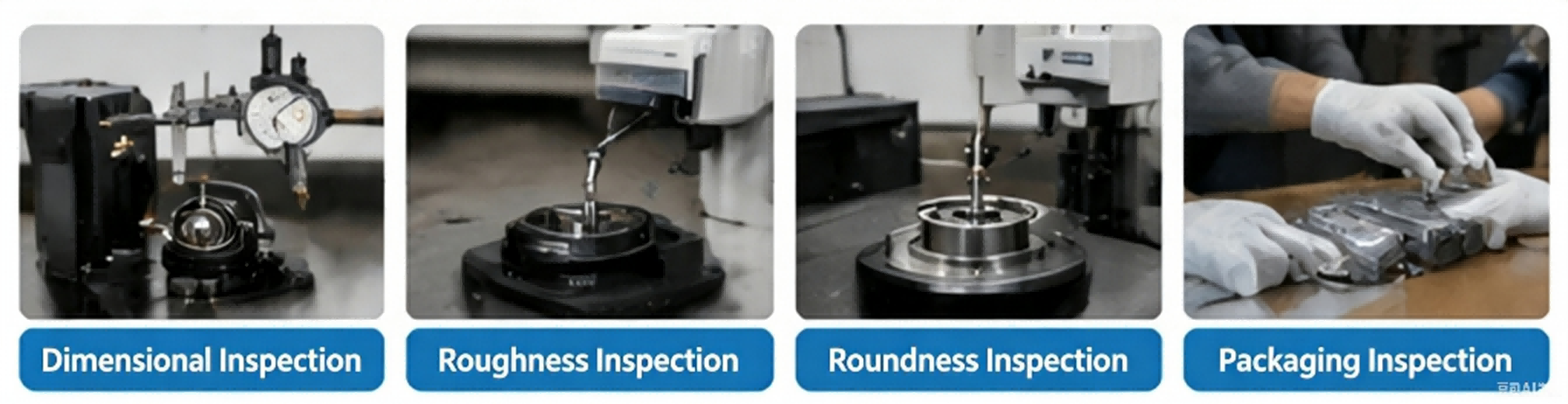
Quality control should cover the full manufacturing process:
- Raw material verification
- Heat treatment control
- Raceway grinding accuracy
- Seal performance inspection
- Final assembly testing
Suppliers should provide quality documentation on request. Consistency is especially important for distributors managing repeat orders across multiple seasons.
5. Does the Supplier Offer Technical Support?
A supplier should be more than a vendor. Experienced suppliers help identify failure causes, recommend replacements, and optimize bearing selection.
This is vital for:
- Repeated bearing failures
- High-speed tillage equipment
- Severe contamination environments
- OEM product development
- Custom machinery projects
Direct communication with technical personnel saves time and money.
6. Are Custom Bearing Solutions Available?
Custom solutions may be required for OEMs or specialized equipment. Ask:
- Can special dimensions be produced?
- Are custom seals or grease options available?
- Can private-label packaging or OEM branding be supplied?
Suppliers with OEM manufacturing capabilities are better equipped for long-term growth.
7. What Is the Supplier’s Production and Delivery Capability?
Even high-quality bearings are useless if delivery is slow. Consider:
- Average lead times
- Inventory for standard models
- Shipping options
- Urgent order handling
- Markets served
Reliable delivery prevents stock shortages during planting and harvesting seasons.
8. Does the Supplier Have International Experience?
Export experience often signals mature processes and consistent quality. Suppliers serving North America, Europe, and South America usually understand:
- International quality standards
- Export packaging requirements
- Documentation compliance
- Stable production management
9. Can the Supplier Provide Real Application References?

Practical experience matters. Ask where bearings are currently used. Common applications include:
- Disc harrows
- Seeders
- Balers
- No-tillage equipment
- Harvesters
- Lawn and garden machinery
Suppliers with broad application experience can recommend more effective solutions. Example: AP28184 AP28186 Agricultural Bearing
10. What Is the True Cost of Ownership?
Lowest purchase price does not always mean lowest operating cost. High-quality bearings may offer:
- Longer service life
- Reduced downtime
- Fewer replacements
- Lower maintenance labor costs
- Improved equipment reliability
Consider total operating cost instead of unit price alone.
Final Thoughts
Choosing an agricultural bearing supplier is not just a purchasing decision—it is a reliability decision.
By asking the right questions about sealing technology, OEM compatibility, quality control, technical support, customization, and delivery performance, buyers can reduce maintenance costs and improve uptime.
Whether sourcing disc harrow bearings, flanged disc units, square bore bearings, or custom assemblies, careful evaluation prevents costly field problems and supports long-term success.