

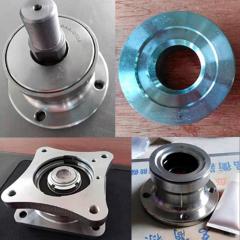
Disc harrows operate in some of the harshest environments in agricultural machinery. While many bearing failures are often blamed on product quality, real-world experience shows that soil conditions are one of the most underestimated factors affecting disc harrow bearing performance and service life.
The same bearing that performs reliably in one region may fail prematurely in another—simply because the soil behaves differently. Understanding how different soil types interact with bearing structures is the first step toward making the right selection.
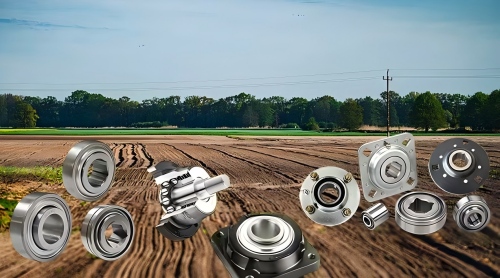
Why Soil Conditions Matter More Than Many Expect
From an engineering perspective, soil affects disc harrow bearings in three fundamental ways:
- Abrasion caused by sand and hard particles
- Contamination from dust, mud, and crop residue
- Corrosion and lubrication breakdown due to moisture and chemicals in the soil
In practice, these factors determine whether seals survive, grease remains effective, and internal raceways maintain their surface integrity. Ignoring soil conditions often leads to recurring failures—even when using “standard” agricultural bearings. Similar failure patterns are frequently observed in field cases discussed in Common Bearing Failures in Agricultural Machinery and How to Avoid Them .
Disc Harrow Bearings for Sandy and Abrasive Soil
Sandy soil is often underestimated because it appears dry and lightweight. In reality, fine sand acts like a grinding compound, continuously working its way toward the sealing interface.
Typical Challenges
- High concentration of fine abrasive particles
- Accelerated seal wear
- Progressive contamination of grease
Recommended Bearing Characteristics
- Triple-lip or multi-lip sealing structures, commonly used in heavy-duty disc harrow bearings such as 205 or 206 series agricultural disc bearings
- Tight seal-to-shield contact to block fine particle ingress
- Stable internal heat treatment to resist micro-abrasive wear on raceways
In these conditions, disc harrow bearings with reinforced sealing systems—such as 205KP8 triple lip trash guard sealed agricultural bearings —are often selected to reduce fine particle intrusion and extend service life. Bearings with simpler sealing designs tend to fail gradually as abrasive particles breach the sealing interface over time.
Disc Harrow Bearings for Clay and Heavy Soil
Clay soil presents a very different challenge. When wet, it adheres heavily to discs and bearing housings; when dry, it hardens and creates strong peeling and torsional forces during operation.
Key Risk Factors
- High operational loads due to soil adhesion
- Shock loads during soil release
- Increased stress on bearing seats and housing interfaces
Selection Considerations
- Bearings with square bore or hex bore designs to improve torque transmission and reduce fretting
- Rigid bearing seat structures to maintain alignment under heavy load
- Consistent internal geometry to prevent uneven stress distribution
The impact of bore design on torque transmission and housing stability is discussed in more detail in Round Bore vs Square Bore Disc Harrow Bearings: Which One to Choose? . In clay-heavy regions, failures often originate not from rolling elements, but from housing deformation or bore slippage under repeated load cycles.
Disc Harrow Bearings for Wet or Muddy Conditions
Wet soil introduces the combined threat of water ingress and chemical exposure. Muddy conditions can quickly compromise lubrication, especially when seals are not designed for prolonged moisture contact.
Common Failure Mechanisms
- Seal swelling or hardening due to water exposure
- Grease washout
- Corrosion on raceways and rolling elements
What to Look For
- Fully sealed disc harrow bearings designed for maintenance-free operation
- Seal materials compatible with long-term moisture exposure
- Internal grease retention optimized for low-speed, high-load agricultural use
For such environments, sealed agricultural bearings like 202NPP9 / 203NPP9 / 205NPP9 series are commonly applied, where seal integrity plays a more critical role than nominal load rating. Differences between sealing concepts are further explored in One-Piece Seal vs Multi-Component Seal in Agricultural Bearings .
Disc Harrow Bearings for Rocky or Uneven Fields
Rocky soil does not necessarily cause continuous wear—but it introduces frequent impact loads that place extreme stress on bearing internals.
- Sudden shock loads
- Localized stress on raceways
- Risk of micro-cracking under repeated impact
In these applications, bearings that appear adequate under static load calculations often fail early due to impact-related fatigue rather than classical wear mechanisms.
Common Mistakes When Selecting Disc Harrow Bearings
- Choosing bearings based on price rather than application conditions
- Using the same bearing configuration for all soil types
- Overlooking seal structure while focusing only on load rating
- Ignoring the interaction between bearing, housing, and soil behavior
Many of these issues are also reflected in real-world disc harrow applications involving standard disc units versus integrated designs, as discussed in Flanged Disc Units vs Standard Disc Bearings in Agricultural Machinery .
How Application-Specific Support Improves Bearing Reliability
In real agricultural operations, selecting the right disc harrow bearing often requires more than choosing a catalog item.
- Matching seal structures to soil abrasiveness and moisture levels
- Evaluating housing rigidity under expected loads
- Testing different configurations in actual field conditions
This approach aligns closely with the selection principles outlined in How to Choose the Right Disc Harrow Bearings for Heavy Farm Equipment .
- Choosing bearings based on price rather than application conditions
- Using the same bearing configuration for all soil types
- Overlooking seal structure while focusing only on load rating
- Ignoring the interaction between bearing, housing, and soil behavior
Many of these issues are also reflected in real-world disc harrow applications involving standard disc units versus integrated designs, as discussed in Flanged Disc Units vs Standard Disc Bearings in Agricultural Machinery .
How Application-Specific Support Improves Bearing Reliability
In real agricultural operations, selecting the right disc harrow bearing often requires more than choosing a catalog item.
- Matching seal structures to soil abrasiveness and moisture levels
- Evaluating housing rigidity under expected loads
- Testing different configurations in actual field conditions
This approach aligns closely with the selection principles outlined in How to Choose the Right Disc Harrow Bearings for Heavy Farm Equipment .
Choosing the Right Disc Harrow Bearing Starts with Understanding the Field
Soil conditions are not just environmental details—they are core operating parameters that directly influence bearing performance and service life.