

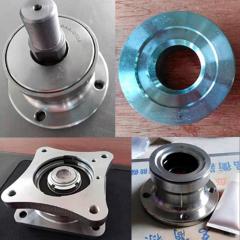
Why This Is Not a Random Failure Problem
In high-speed tillage (≥15 km/h, ≥200 RPM at the bearing), a standard disc harrow bearing typically fails within 150–300 hours. At lower speeds (≤8 km/h), the same bearing may last 600+ hours.
This is not a quality problem. It is a system mismatch between machine evolution and bearing design limits.
1. The Real Problem – System Overload
Most disc harrow bearing failures are system overload failures, not manufacturing defects.
2. What Has Changed in Modern Equipment?
Higher Field Speed (10–25 km/h)
Modern operations increase RPM and thermal stress significantly.
Larger Implements
More discs = higher load per bearing unit.
Reduced Maintenance
Longer operation cycles reduce lubrication frequency.
3. Four Failure Mechanisms
1. Micro Shock Fatigue
Rocks and hard soil cause raceway cracking and pitting.
2. Seal Failure & Contamination
Soil ingress accelerates wear and corrosion. Seal design is a critical factor in bearing life.
Single lip seal: 100–150 hours
Triple lip seal: 500+ hours (abrasive soil conditions)
3. Grease Breakdown
Centrifugal force reduces lubrication efficiency at high RPM.
4. Inner Ring Creep
Poor shaft fit causes micro movement and overheating.
4. Why Standard Bearings Fail
Standard bearings are designed for moderate load and speed conditions, not modern high-speed tillage systems.
5. Engineering Requirements
Load Capacity
Hardened raceways and fatigue-resistant steel required.
Sealing System
Multi-lip sealing is essential for contamination resistance.
Thermal Stability
High-temperature grease (≥160°C) required for continuous operation.
Shaft Fit
Controlled interference fit prevents creep.
6. Standard vs High-Performance Bearings
| Parameter | Standard | High-Performance |
|---|---|---|
| Seal System | Single lip | Triple lip + excluder |
| Contamination Resistance | Low | High |
| Service Life | ~1 season | 2–3 seasons |
7.How to Select the Right Bearing for High-Speed Tillage
Selecting the correct bearing for high-speed tillage applications requires more than matching dimensions. It must be based on actual field conditions, load characteristics, and failure risks.
Do not select bearings based on catalogue data alone. Always match the bearing to real operating conditions.
Step 1: Define Operating Conditions
- Field speed (km/h or RPM at bearing)
- Soil type (sand, clay, rocky)
- Moisture level and contamination exposure
- Working hours per day
Step 2: Estimate Load Per Bearing
If exact load data is unavailable, use this estimation:
(Total implement weight ÷ number of discs) × 1.5 safety factor
This provides a baseline for minimum dynamic load rating selection.
Step 3: Select Seal Structure Based on Soil Conditions
| Soil Condition | Recommended Seal Type |
|---|---|
| Dry / Low contamination | Double lip seal |
| Abrasive soil / sand | Triple lip + excluder |
| Wet / muddy conditions | Cassette seal system |
Step 4: Verify Lubrication Capability
- Grease drop point ≥160°C
- High resistance to centrifugal separation
- Stable under continuous operation
Step 5: Confirm Shaft Fit and Installation Parameters
- Shaft tolerance: G6 recommended
- Alignment tolerance: ≤0.2°
- Proper torque during installation
Choosing bearings only based on size or OEM reference (e.g., P204) without considering speed and soil conditions.
Correct selection can increase bearing life by 2–3 times under high-speed tillage conditions.
8. Engineering Specification Checklist
| Parameter | Requirement | Verification |
|---|---|---|
| Dynamic load rating | ≥ required load ×1.5 | Datasheet |
| Grease drop point | ≥160°C | Test report |
| Seal type | Triple lip + excluder | Spec sheet |
| Hardness | 60–64 HRC | Batch report |
| Shaft fit | G6 | Engineering drawing |
9. Field Case – Northern Italy (2024)
Equipment: 6m disc harrow, 24 discs, 18 km/h
Initial performance: 180–220 hours (standard bearing P204)
Failure modes: 70% seal contamination, 30% inner ring creep
Engineering upgrade: Triple lip seal + G6 fit + 165°C grease
Result: >500 hours lifespan, 60% failure reduction
10. Installation Errors
| Error | Effect | Correct Value |
|---|---|---|
| Over-torque | Heat + distortion | OEM spec |
| Misalignment | Edge loading | ≤0.2° |
| Shaft undersize | Creep failure | G6 tolerance |
11. Engineering Support
Before contacting us, please prepare:
- Failed bearing photos
- Operating hours
- Machine specifications
- Soil conditions
- Current bearing model
Our engineering team can analyze your application and identify the exact failure mechanism.
What we need:
- Bearing photos (failed units)
- Operating speed and load
- Soil conditions
- Current bearing model
You will receive:
✔ Root cause analysis
✔ Recommended bearing configuration
✔ Service life improvement estimation
Response time: within 48 hours
Contact Engineering Team